Featured
Table of Contents
Understanding of virtual truth (VR) and Increased Truth (AR) If you want to secure a leading position in your company in this digital marketing age, don't forget to update the Front-end Application of your site. Web portal with the assistance of the very best Front-end designers of CMARIX, the very best Web and app development business.
The frontend landscape changes faster than a lot of designers can maintain. Between new JavaScript frameworks, speculative CSS functions, and emerging build tools, it's simple to feel overloaded by what you must be finding out next. We take a different technique at WeAreBrain. Instead of chasing after every trend, we focus on what actually improves the items we develop: markets like ToolSwap, accessibility compliance projects for major e-commerce platforms, and performance optimisation programmes for merchants.
Here are the 10 frontend trends we're tracking closely in 2026, validated through real client work. React is getting its own compiler, and it alters how we approach optimisation. For years, we've been manually adding useMemo and useCallback hooks throughout our code, attempting to keep performance in check. It's tedious work that breaks flow and mess codebases.
Modern Front-End Design Trends for Drive ROI
Consider it as having a performance professional reviewing your code behind the scenes, optimising rendering without you raising a finger. Meta's currently utilizing it internally, and by 2026, it's available for everybody. The genuine win? Less time debugging performance concerns, cleaner code, and more psychological area to focus on building features that in fact matter to users.
70% of designers are currently using or planning to use AI coding assistants. These aren't just autocomplete tools anymore. AI-first development environments prepare for architectural decisions, recommend performance enhancements, and handle whole functions with minimal assistance. GitHub Copilot and Cursor AI are becoming true advancement partners rather than fancy text forecast.
AI accelerates the grunt work, but strategic decisions about architecture, user experience, and scalability still require human judgement. Start with AI assistants on recurring taskscomponent boilerplate, test writing, paperwork. Construct trust slowly before handing over more complex architectural decisions. Speed matters, and physics sets difficult limitations on how quick data can take a trip.
This matters for frontend development due to the fact that it alters what's possible. Edge computing brings calculation closer to users, making it possible for much faster action times and enhanced experiences for global applications.
, a specialised market platform for tool trading, using React together with PHP Laravel. The two-sided marketplace required seamless function switching in between buyers and sellers whilst preserving quick efficiency.
Leveraging Server-Side Rendering for Improve Web Rankings
The structure manages more reasoning server-side, creating experiences that feel quickly even when the network isn't ideal. For a market launching in a competitive area, this efficiency benefit was essential for early user retention. In 2026, expect tighter combination with edge computing and AI-powered optimisations that adapt rendering techniques based upon real-time conditions.
By 2026, video editors, 3D modelling tools, and video games run directly in internet browsers with efficiency that rivals native applications. This opens up possibilities for tools that are immediately accessible without setup friction.
When we require performance-critical processing, we can compose it in Rust and let WebAssembly manage the internet browser combination effortlessly. Its type system captures mistakes before they reach production, makes refactoring much safer, and serves as documents that never ever goes stale.
Evaluating Modular vs Monolithic Content Solutions
The type safety becomes much more important when debugging dispersed systems where logs are harder to access. From our experience, the upfront financial investment in TypeScript pays dividends when jobs scale. The refactoring confidence alone justifies the adoption expense. Here's a pattern driven by necessity: optimising for performance also optimises for energy consumption.
Lighter code uses less server resources, needs less information transfer, and runs much faster on devices. Users get much better experiences, and the environmental impact reduces., we tested efficiency optimisations alongside UX enhancements.
Atomic design principles are becoming standard in component libraries. Headless UI libraries like Radix UI and Tailwind UI offer flexible, accessible elements that groups can make up into complete interfaces. We recently helped a leading e-commerce platform attain EU Ease of access Act compliance across numerous country sites. The work needed aligning legacy templates and frontend parts with WCAG 2.1 AA standards.
Optimizing Digital Experiences through API-First MethodsComprehensive Framework for Selecting Headless CMS Systems
The approach produces consistency whilst preserving versatility. Design tokens and international theming requirements indicate interfaces stay cohesive even as private parts develop. Beyond compliance, the work resulted in cleaner UI, more consistent components, and much better use for all clients, including those on mobile phones and slower connections. Google's Core Web Vitals are ending up being a lot more influential in how apps are constructed and ranked.
We optimise for these metrics from the start instead of treating them as afterthoughts. The performance improvements benefit users whilst also enhancing discoverability. In our availability compliance work, numerous WCAG requirements lined up perfectly with Core Web Vitals optimisationproper heading structure, keyboard navigation, and semantic HTML all add to much better efficiency ratings.
A subtle animation when hovering over a button, the method a notification gently appears, how elements shift in between states, these micro-interactions define how a user interface feels. In our A/B screening program with a large seller, we tested variations of item card designs and filter behaviour. The sticky filter execution that won included thoroughly tuned micro-interactions, a subtle highlight when filters used, smooth transitions when results upgraded.
Optimizing Digital Experiences through API-First MethodsWays to Scale Enterprise Architectures for 2026
They make interfaces feel crafted rather than assembled, thoughtful rather than functional. TypeScriptLowHigh reduces bugsHigh adopt nowReact CompilerMediumHigh performance boostHigh evaluate for React full-stack capabilityHigh think about for new projectsAI Coding AssistantsLowMedium productivity gainHigh test with teamCore Web Vitals optimisationMediumHigh SEO + UXHigh develop in from startAtomic Design/Component libsMediumMedium consistencyMedium execute graduallyWebAssemblyHighMedium niche usage casesLow unless specific needSustainable developmentLowMedium long-lasting benefitMedium optimise naturallyHybrid computingHighLow infrastructureLow unless scale demandsMicro-interactionsLowMedium UX polishMedium add progressively Frontend patterns aren't about going after every brand-new structure.
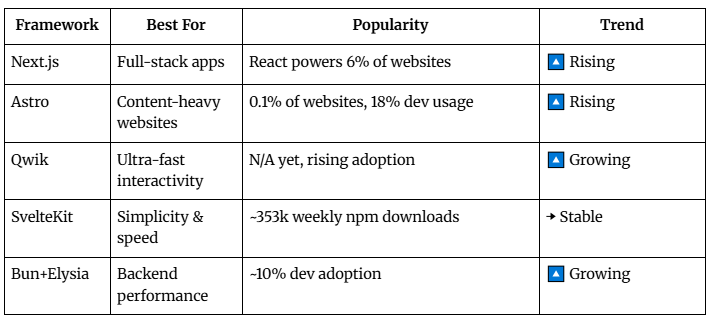
From our deal with e-commerce platforms and markets, we have actually discovered that the finest technical choices originate from production experience, not conference talks. Pavel and our frontend team examine patterns by one easy step: does it make the difficult problems easier? These provide immediate worth and substance in time Build self-confidence before handing over important work and similar tools reduce architectural choices whilst keeping versatility The designers who prosper will combine AI efficiency with human imagination, utilize automation without losing craft, and construct experiences that respect both users and the planet.
If you need expert frontend advancement to bring your digital item vision to life, contact us to see how we can help.

Latest Posts
Preparing for Next-Gen Engine Core Changes
Optimizing Digital Platforms to Meet AI Visibility Requirements
Optimizing for GEO and New AI Search Systems